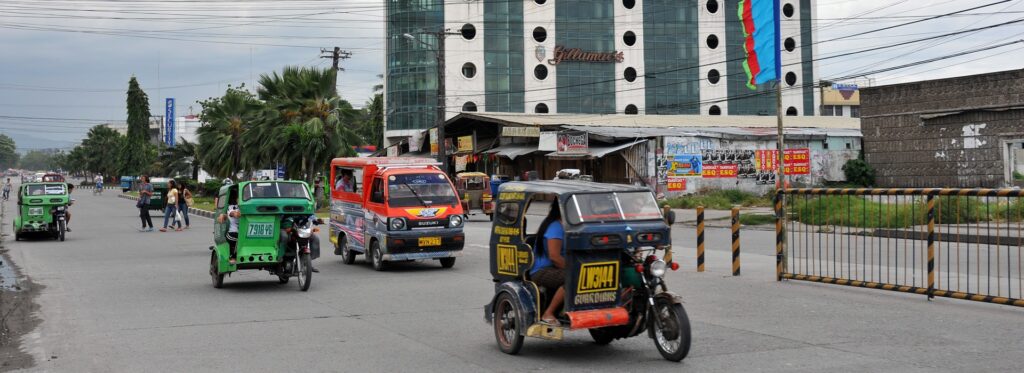
Tricycles remain the most iconic and practical mode of transport in Gensan, serving as both a cultural symbol and a vital economic lifeline. Despite modernization efforts, they continue to dominate short-distance travel, though challenges like regulation and sustainability shape their future.
History of Tricycles in Gensan
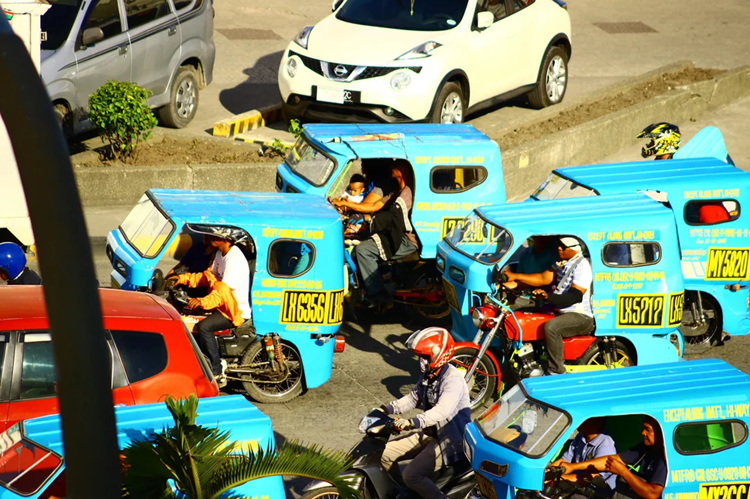
Tricycles in General Santos City have an interesting history. They emerged after World War II, when motorcycles fitted with sidecars became a practical response to limited transport options and underdeveloped roads. Throughout the 1960s and 1970s, Gensan began growing due to the development of agriculture, fishing, and trade. During that time, tricycles proved to be ideal vehicles for navigating narrow, uneven, and interior roads that larger public utility vehicles could not access.
By the 1990s, tricycle transport had transformed into an organized transport sector. The city government introduced franchising, route designations, and driver associations to regulate operations. Terminals appeared near public markets, schools, hospitals, and barangay centers, embedding tricycles into the daily rhythm of the city. For many residents, a tricycle ride became the essential first and last leg of any trip.
Why Are Tricycles Blue
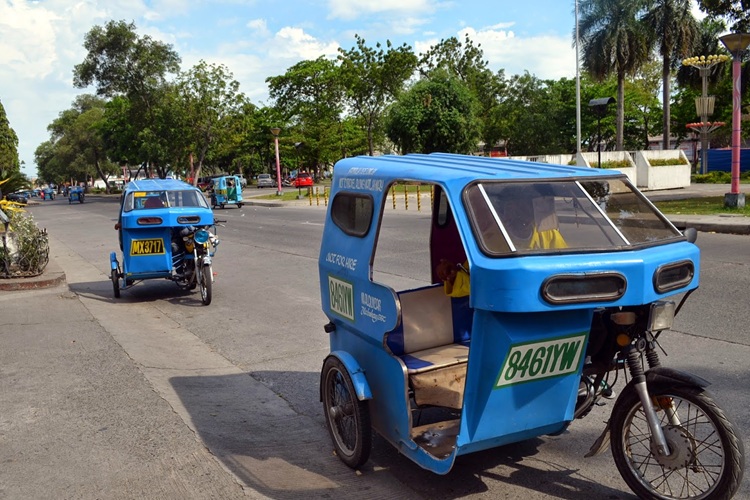
One of the most distinctive features of GenSan’s tricycles is their blue color scheme. This is not merely aesthetic but also a regulatory requirement. The city government mandates blue paint to standardize public utility tricycles, ensuring they are easily identifiable and distinguishable from private or “colorum” (illegal) units. The uniform color helps authorities enforce transport rules and maintain commuter safety.
Price Scheme
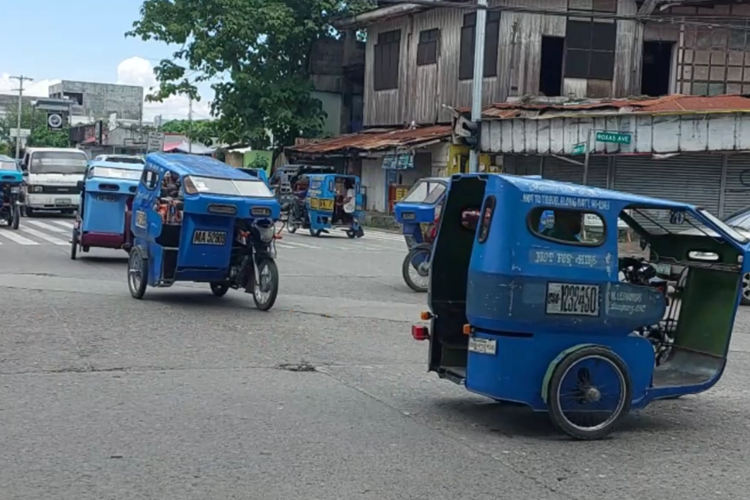
Officially, according to City Ordinance No. 8, Series of 2023 the tricycle fare in General Santos City is ₱15 for the first four kilometers, with an additional ₱1 charged for every succeeding kilometer. This regulated fare applies to all registered tricycles operating under the city’s official clusters.
However, in practice, fares are rarely calculated this way. On the ground, if you are traveling toward downtown or the malls, you might pay only ₱15 to ₱20. But if you are going away from the city center, the price is often subject to negotiation. To address this issue, the city has introduced a web app for calculating fares. It remains to be seen whether this app will influence tricycle pricing.
Also, it is advisable to always carry the exact amount of money, as tricycle drivers rarely have coins to give change.
Chatty Drivers
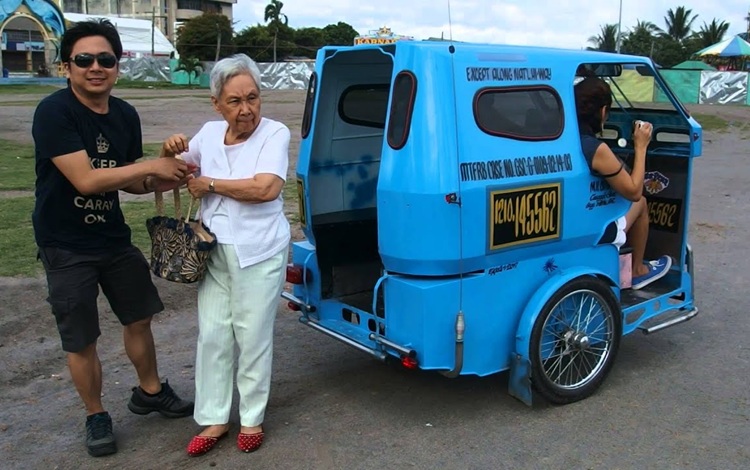
Tricycle drivers tend to be extremely chatty. Whether out of politeness, courtesy, or sheer boredom, you will rarely have a quiet ride in a tricycle.
Roughly, they can be divided into two categories: those who like to talk about their struggles in life, and those who will joke about just anything. If you are a foreigner, they will show great interest in your place of origin and often suggest places you should visit.
What Makes Tricycles So Efficient
Tricycles are optimized for short-distance, intra-barangay mobility. Their efficiency comes from several practical characteristics:
- Maneuverability: They can pass through narrow streets and densely populated residential areas.
- Accessibility: They provide door-to-door transport, eliminating long walks to main roads.
- Affordability: Fares are relatively low and predictable for short trips.
- Availability: Terminals are distributed throughout the city, and units operate throughout the day.
- Low infrastructure requirement: They do not depend on large roads or terminals to function.
Are Tricycles Here to Stay
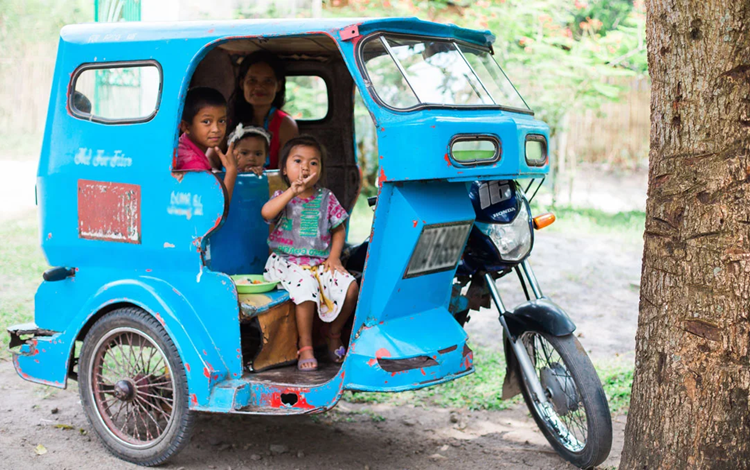
Gensan is developing, and it’s happening quite fast. This development is changing some habits. Jeepney rides are frequent and relieble (and comfortable, too), more families can afford private cars, and even bicyle trend is on the ride. Despite all that, role of a tricycle in Gensan cannot be usurped.
While there are ongoing discussions about traffic congestion, environmental concerns, and modernization of public transport, the practical need for tricycles in interior barangays ensures their continued presence. Instead of fading away, tricycles are gradually evolving through improved vehicle designs, stricter regulation, and potential shifts toward more efficient or electric models in the future.
Advantagles and disadvantages of Gensan Tricycles
Pros
- Provides direct, door-to-door service
- Accessible in areas unreachable by larger vehicles
- Creates livelihoods for thousands of families
- Affordable and convenient for short distances
- Strong community presence and familiarity
Cons
- Contributes to road congestion on major streets
- Exposure to weather for passengers
- Limited passenger capacity
- Environmental impact from fuel emissions
- Inconsistent comfort and safety standards across units